We cut the wrong thing
The most important work I've ever done had no deliverable. It was never in the brief. And it's the thing missing from almost every AI conversation happening right now.
Before that reads as AI-bashing — it isn't. I love technology. I've spent my career inside my purpose: leveraging tech to solve human problems.
And I want you experimenting. Tinkering. Getting your hands dirty with these tools. That curiosity is core to the work, not a distraction from it. The trap is something else entirely: experiments quietly hardening into a strategy nobody consciously chose. The experiments should strengthen your decisions about how and why to use the tech. Not replace them.
This is about getting the sequence right. Human first. Always.
In every role I've held — strategist, coach, CEO — the real work was the same. It was always the step I loved more than anything else in those roles. Sitting with the person across the table from me until we could both see their unique value.
Always a few questions. What are the challenges in your role? Where are the opportunities? Then listening. Staying curious. Not reaching for the framework yet.
My best strategy inputs never came from the technology. They came from those conversations. Regardless of the tech on the table — and I've sat through every wave of it.
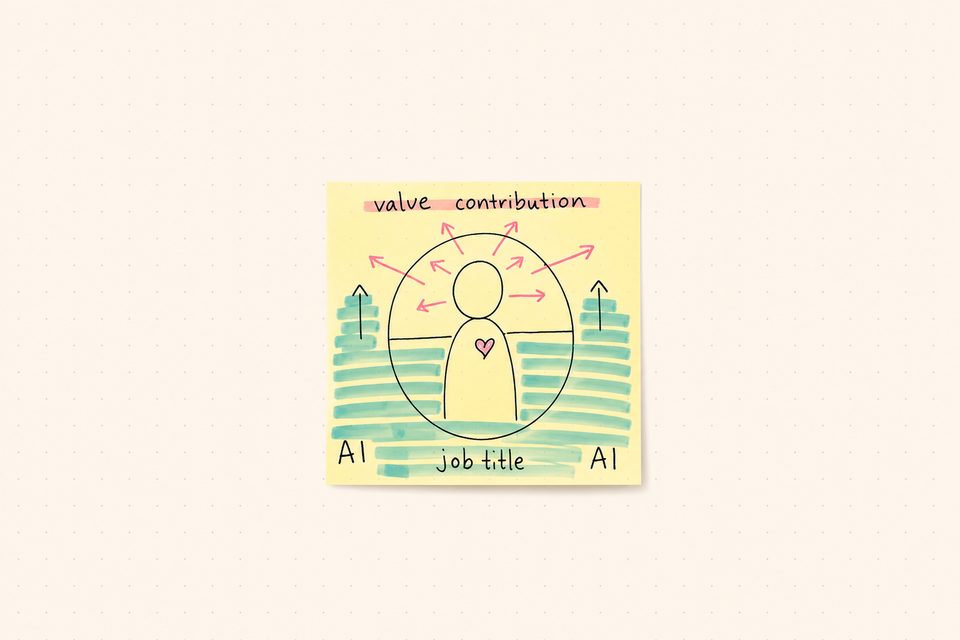
Those conversations did something else too. They defined the role of each department inside the new strategy. A job description for the department itself, with a map of the capabilities it needed to hold.
We skip that now. The JD review is treated as a ridiculous waste of time. HR admin. Something to get past so we can get to the real work — the tech.
And I'm not pointing at anyone here. I've let it get cut from scope. More than once. A client pushes on the timeline, the JD review looks like the soft part, and I let it go to protect the pieces that felt easier to defend. It was always the wrong trade.
I also know how this sounds coming from me. I've spent years arguing that job titles are irrelevant — don't put people in boxes, look at the value instead. I still believe that. But the JD I'm talking about isn't the box. It's the value map. The title can say whatever it likes; the review is where you find out what a person, or a department, actually does that matters.
The numbers on what skipping costs
McKinsey just put figures around it. Seventy-five per cent of roles need fundamental reshaping right now, and just about everybody in the workforce will need a new job description within the next two to three years. Meanwhile, more than 80 per cent of companies say they're not yet seeing bottom-line impact from their AI investments.
I don't think those are two separate findings.
The companies not seeing impact are the ones layering AI onto roles nobody has looked at properly in years. Automating tasks inside jobs that were designed for a pre-AI world.
The job description review — the one we cut for being a waste of time — turns out to be the missing first move. And two to three years? We don't have that. This isn't the work you do before the AI strategy. This is where the AI strategy starts.
Where the work starts
This is how I run it. The experiments keep running the whole time — curiosity never leaves the room. But the tech doesn't get a vote until step four.
1. Define the five strategic pillars with the working group — team, executive and board together. These are the problems the business has chosen to prioritise. Not everything. Five. Strategy is as much the noes as the yeses.
2. Ask each executive to review their role and name the five things their department does to support those pillars. Most executives haven't been asked this in years. Some have never been asked. And it can be the team lead, or the department head. Same role. They determine how the team's time and effort get allocated.
3. Then the harder question. Of those five, where does the real value come from now? And where will it come from in the next twelve months? Watch what happens in the room. This is where the listening matters more than the framework.
4. Now, with AI in the room: which of the five deserves more of you? And which could you hand to AI as an experiment? They will hear headcount review. Every time. Which is why the next question matters more than this one.
5. What if you got 20% of your time back to spend on the area where you create the most value for the business? What would you do with that time?
That last question changes the temperature in the room. It's the difference between AI as a threat and AI as the thing that finally clears space for the work people actually came here to do. (Why 20%? There's no study behind it. It's simply small enough to believe and big enough to matter — roughly a day a week.)
One caveat, because I've watched it happen. If the room doesn't trust that this isn't a headcount review in disguise, you'll get performed answers. Polished. Safe. Useless. No executive will honestly name what could go to AI while they believe the answer costs their team jobs. So the leader goes first — their own role, their own five, their own 20% — before asking it of anyone else. The process doesn't build the trust. You do.
What it looks like in practice
If you're in marketing: Drucker said 'marketing is the whole business seen from the customer's point of view'. What if knowing the customers POV is the single most valuable thing your department could do? Which customer segment generates the most profit? Which segment would grow faster if you did things a little differently? Where is interest coming from? Then the 20% comes from handing AI the busywork that's been crowding out that value. Fail to be intentional and you either A) add more busy work or B) automate that stuff that should have been protected.
IKEA is the honest version of this story — because they didn't start with the people strategy. They started with the tech. Their chatbot, Billie, resolved 47% of the 3.2 million customer queries it received. The people question showed up in the residue: the 53% Billie couldn't handle turned out to be conversations that needed human judgment. The intention is what matters. People at the core. If it wasn't, they'd have cut 8,500 jobs and called it an AI strategy.
Instead, they read the 53% as a value question, not a cost question, and retrained those call-centre workers as interior design advisers. Remote design services now generate €1.3 billion in annual sales, with a target of 10% of total revenue by 2028.
What can't be skipped is the moment someone sits with the people and asks where the human value actually is. A people strategy. Then see what it becomes. A product. A workflow. A new way of creating value nobody could have planned from a use-case list.
If your team is you
Plenty of you reading this don't have five executives or a board. The work is the same — just quieter internal work. Your five pillars are the five problems you or your business has chosen to solve. Your departments are the hats you wear: the marketer, the maker, the bookkeeper, the salesperson. Name the five things each hat does. Ask where the real value is now, and in twelve months. Then the same question, with AI in the room — which hat deserves more of you, and which could you hand over as an experiment?
You can run this on a Sunday afternoon with a notebook. It's the same conversation. You're just sitting on both sides of the table.
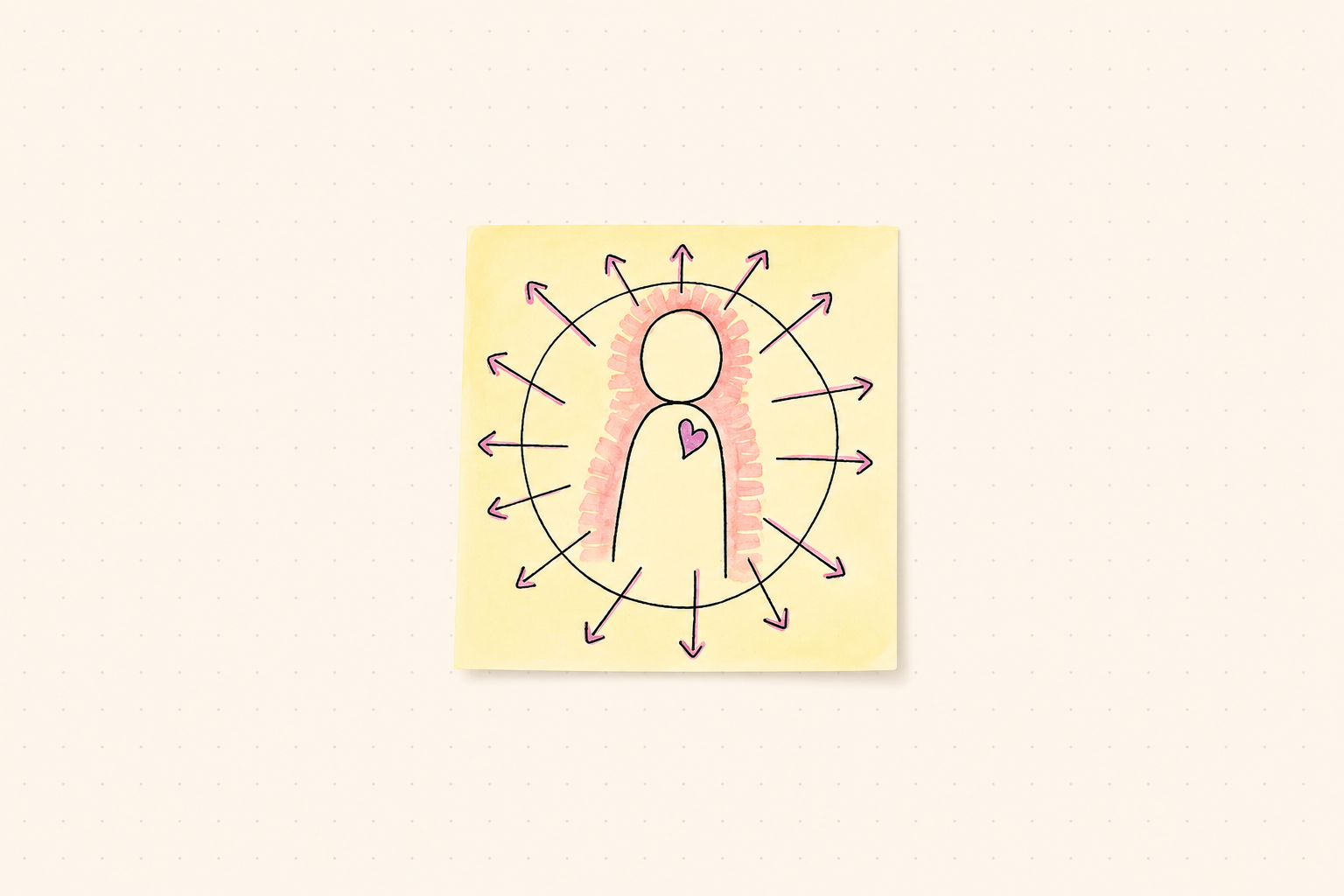
And the best part of this work? Value doesn't behave like a resource. Resources deplete as you draw on them. Your unique value does the opposite — the more you explore it, the more it expands.
The same work, one person at a time
Regular readers might remember the start of last year, when I ran a version of this on myself — asking AI to show me my own value, stripped of the job title. I wrote then that humans are the veins of the strategic framework. Not adjacent to growth. Core to it.
This is that same work, done with a team instead of a mirror. Sitting with our people until they can see where their value is, then building the AI experiment around it.
Understanding your unique value beyond a job title might be the key opportunity and challenge of the AI age. Though I suspect it's older than that. The tech just made the question urgent — it was always worth asking.
That's our job as leaders right now. Not the AI rollout. This.
What would your team do with 20% of their time back?
I'm Jane Peacock, founder of Partners in Digital. Strategist, coach, recovering job-title collector. I help founders put humans at the core of business growth — and make the tech earn its seat. I write about the human stuff underneath strategy, growth and AI, and you can follow me on LinkedIn if that's your jam.