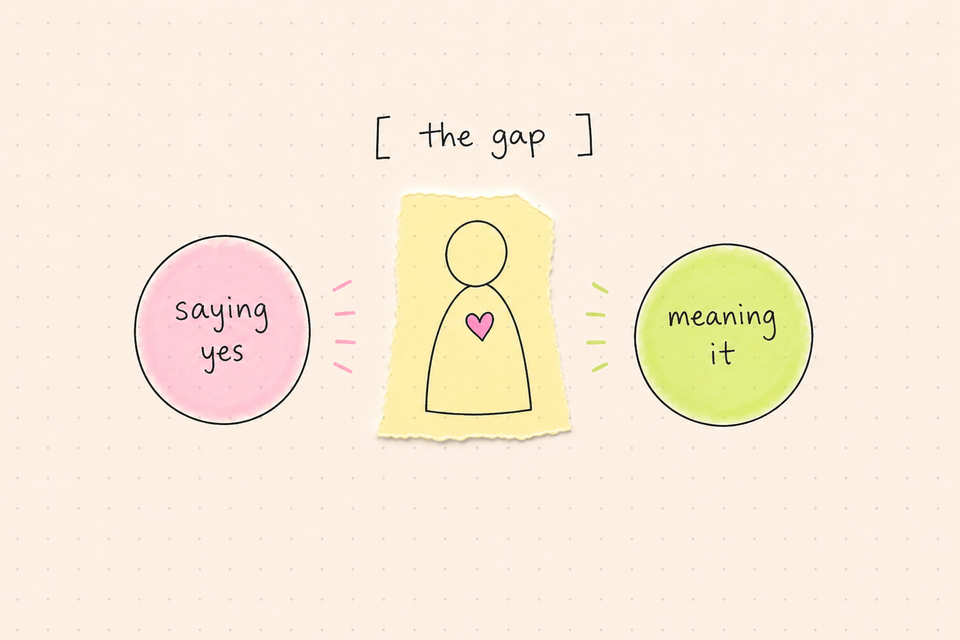
The gap between saying yes and meaning it
There was a founder I worked with earlier in my career. Retail brand. Smart, articulate, genuinely passionate about what they'd built.
The conversation was good. They answered every question I asked. I listened, waited for a picture to form — and it almost did. Something in the answers wasn't quite settling. Not wrong. Just not quite right. Like something was missing, but I couldn't name what.
I moved forward anyway.
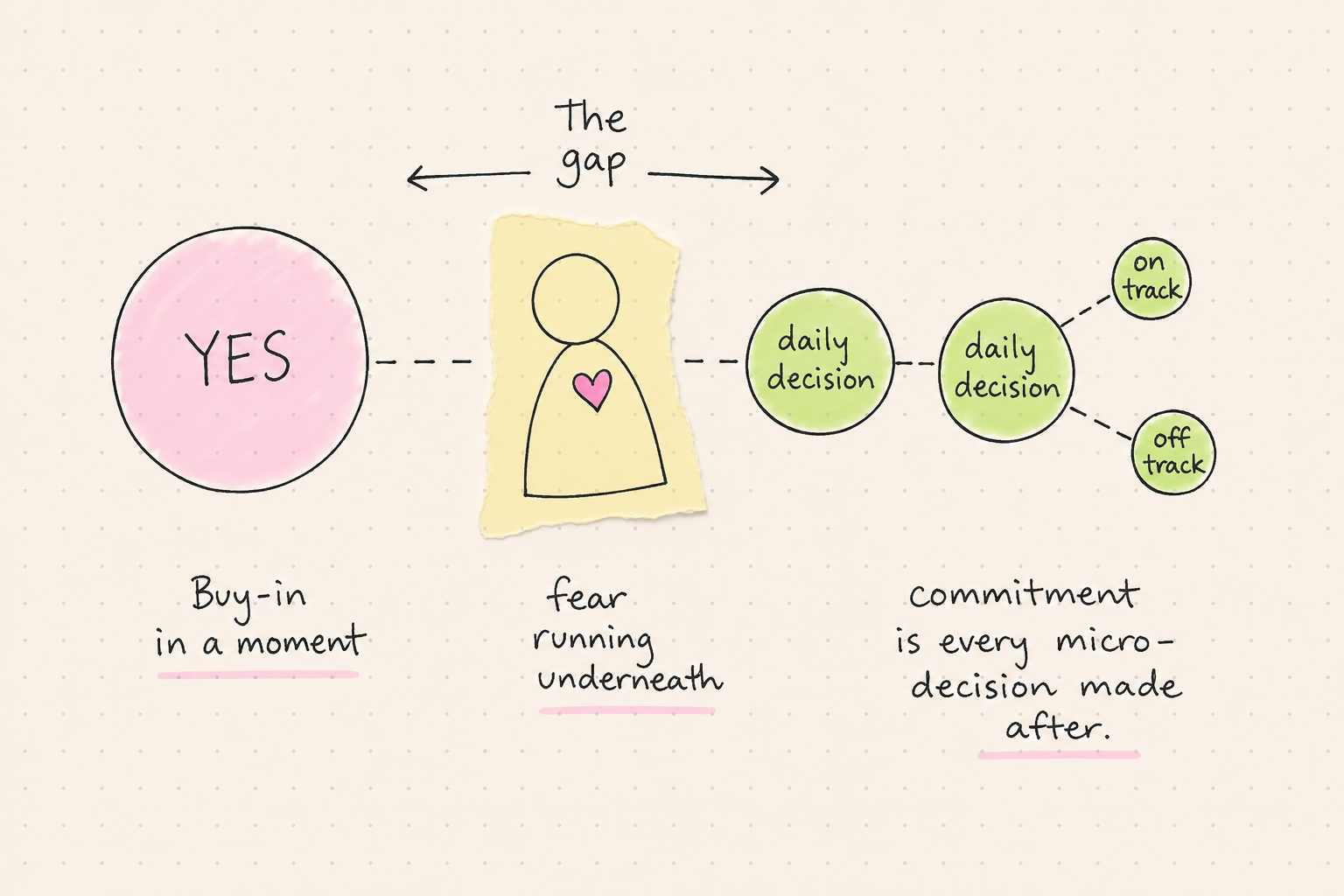
We built the strategy. They agreed to everything — enthusiastically, convincingly. And then nothing moved. The fear underneath drove micro-decisions that pulled the business back to what it had always been rather than toward what they said they wanted. The YES faded into drift.
It wasn't their failure. I moved too quickly from problem to solution because sitting in the discomfort — in the fear and the gap — felt uncomfortable for both of us. That unnamed thing from the first conversation never surfaced. And it ran the strategy from underneath.
What I used to believe
I used to think strategy was about clarity and buy-in. The YES when the strategy still feels exciting, when the energy and momentum had built.
Get the room clear on the direction. Get people's agreement. And then they'd get on board.
Wrong. Not in theory — in practice, with real consequences.
Buy-in is a moment. Commitment is every micro-decision after that. I learned this as a CEO. You can have a vision everyone agrees with on Monday. By Friday, one decision in a meeting you weren't in has started pulling sideways — not from opposition, but because the old way was easier.
Where the fear actually lives
The real fear lives in two places.
The first: being honest about where you actually are. Not where you'd like to be. The numbers that make you uncomfortable. The team problems you've been managing around. Founders go quiet here — because acknowledging where you are means acknowledging how you got there.
The second: getting honest about what you're afraid of. Not professionally. The thing underneath. That fear is almost always in the room. It almost never gets named. And if it doesn't get named, it runs the strategy — quietly, through decisions that don't get made, commitments that fall away, problems that never quite get addressed.
The founder was protecting themselves from that fear becoming visible. I let them, because naming it felt like overstepping. That was the mistake. The work requires going there. It is the real work that shifts the dial.
This is where I start. Well before we move in to strategy. Be that AI or digital.
Culture is the obstacle
When vision meets reality, people have to grow.
Some do — they become fuel. Some don't — they become resistance, often without meaning to. You don't need everyone. You need the majority moving forward. Momentum builds. Misalignment becomes undeniable on its own.
The culture isn't what you fix before the strategy works. It's what changes because it is.
What this means if you're reading this
If you're a founder sitting with a strategy that isn't moving — or about to build one — the question I'd ask you isn't about the technology, or the market, or the competitive landscape.
It's this: what are you not saying?
Not to me. To yourself.
What's the part of the business you're curating around?
What's the fear running underneath the plan?
What do you already know that you haven't let yourself fully acknowledge?
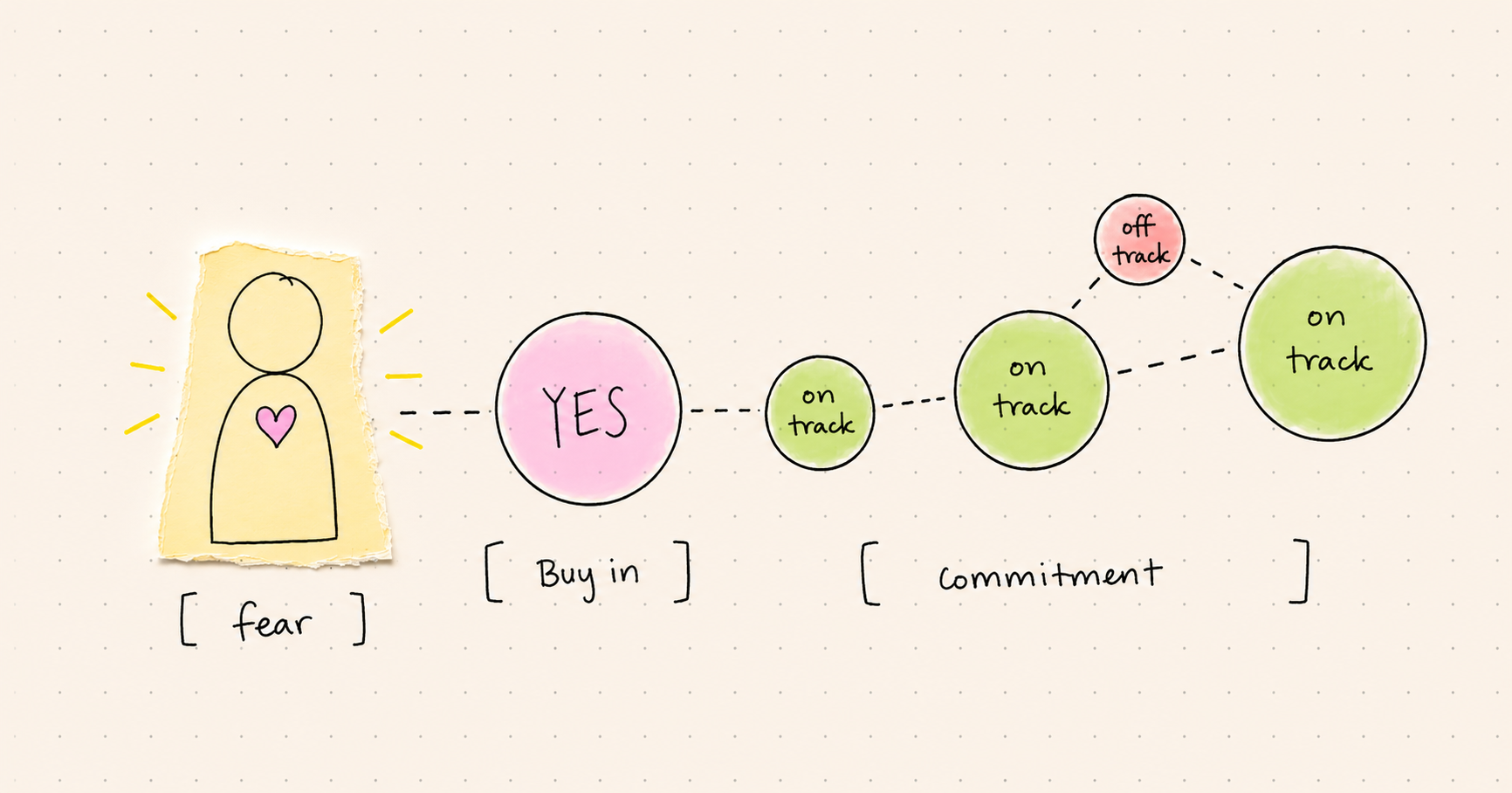
Get that on the table first. Not because it's therapeutic — because it's structural. When buy-in is anchored in honesty, it runs deeper. People know what they actually said yes to. And when the micro-decisions come — and they always come — on track isn't a vague aspiration. It's a reference point everyone shares because everyone helped build it from the same honest starting place.
The ongoing work after that isn't management. It's reinforcement. Reminding people (including yourself) of what they already understood and already agreed to. That's a very different conversation to have.
The strategy that works isn't the most elegant one. It's the one that was honest about what it had to move through — and honest with the people who had to move through it.
Start there.
Next issue: what the strategic work actually looks like. Fourteen things, in order. None of them are coming up with a strategy. That's the outcome.