The expert in the room
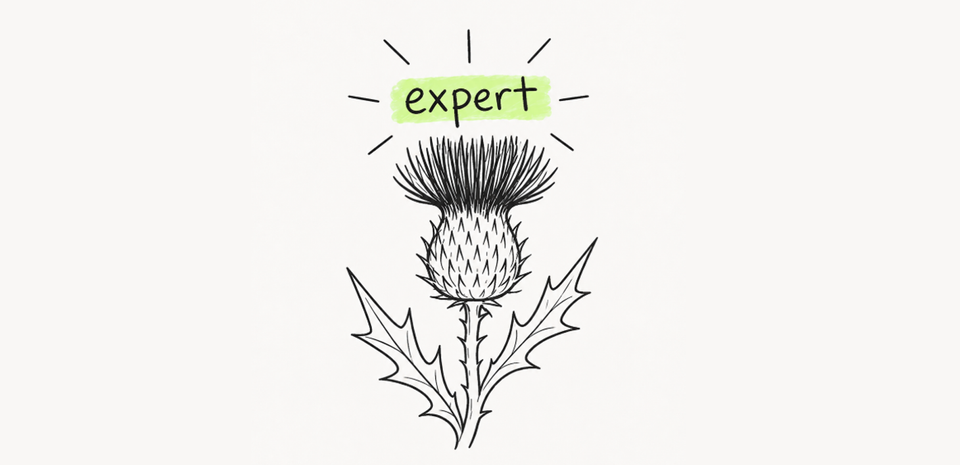
I've been sitting with my relationship with words lately. The ones I love. The ones I bristle at.
Expert is one of the bristle ones.
Six letters. A lot of cargo.
The Latin root, expertus, means tested, tried, proven. Someone who moved through experience and came out the other side with something solid. That version is almost humble. Earned by living, not declared.
Somewhere along the way, expert stopped being a journey and became a status. A closed door. A badge people wear while the rest of the room quietly adjusts its posture.
I've spent over two decades in digital transformation projects. Rooms full of smart people, important decisions, real stakes. And I've watched something happen in those rooms so reliably it feels almost like a law.
The expert enters. The room quietly shuts down.
Not dramatically. Subtly. The people who feel under-equipped stop asking questions. They go into receiving mode. The technology gets louder than the humans in the room.
This is authority bias at work. We give disproportionate weight to the person with the title. We suppress our own judgment. We defer. We wait. We take notes.
And what gets lost in that deference is the thing that was actually needed.
The expertise that matters most in transformation projects is not the expertise of the person with the badge. It's the expertise of the people who live inside the work. Who know the workflows. Who know where the friction sits. Who know which problems are worth solving and which are being solved for someone else's reasons. That knowledge took years to build, in a specific context, with specific consequences. No model arrives with it. No consultant arrives with it either, regardless of day rate.
The projects I've watched stall didn't stall because the tech failed. They stalled because the humans couldn't find themselves in it. Because no one made space for the questions that felt too basic to ask. Because expertise created a hierarchy, and the hierarchy froze the people it needed most.
The expert in the room costs everyone the expertise in the room.
I should be honest about something else, though.
My bristling at that word isn't entirely intellectual.
There's a smaller voice underneath it. The one that whispers: you don't really know what you're talking about. The imposter one. The one afraid to claim a title in case someone looks too closely and finds the gaps.
I have genuine experience. Decades of it. I also have extensive acquaintance with the edges of my own understanding. With the moments where I'm extrapolating from pattern rather than knowing from fact. With the questions I'm still sitting with.
Both things are true. And I've learned, slowly, that the second thing is not an argument against the first. It's a precondition for keeping learning.
It's also what people actually need from the people they work with. Not certainty. Honest orientation. Curiosity. The willingness to say I don't know yet and keep going anyway.
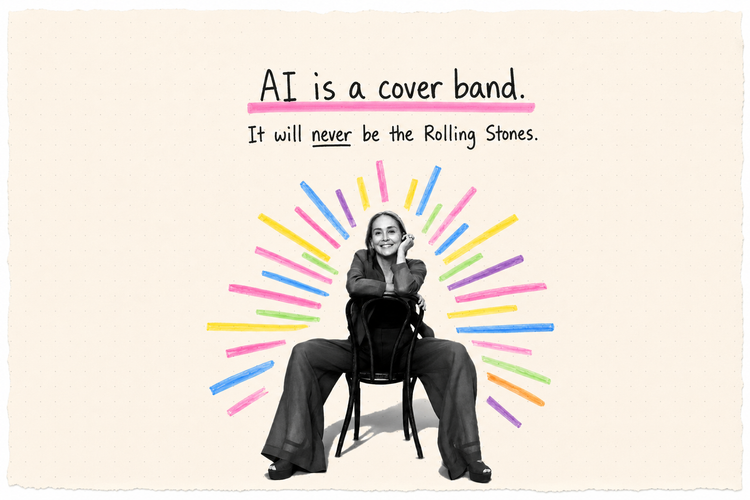
None of us are experts in AI.
A small number of people can genuinely own that label. The researchers and architects building the models, in a field that has been developing for decades before ChatGPT arrived in November 2022. The rest of us are in a different position. Working out what this means for our actual work, in real time, with incomplete information.
That's not a deficit. That's the honest condition.
The expertise you bring is your lived experience of your own context. Nobody else has it. You know your work. You know your industry, your organisation, where the slow damage accumulates, which meetings are actually decisions and which are theatre. Add curiosity to that. Run small experiments. Watch what happens. Be willing to be wrong and keep going.
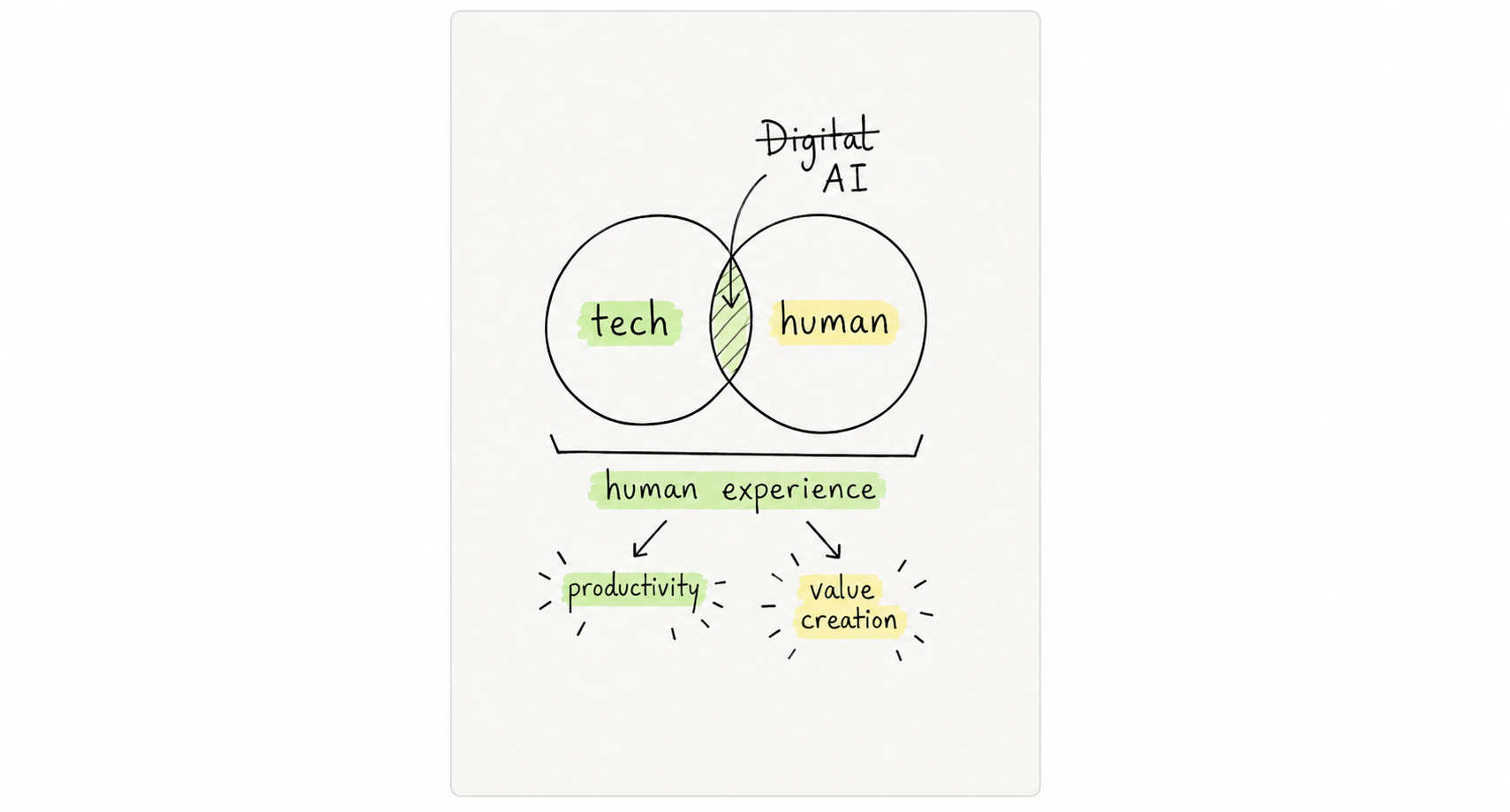
We gain the expertise by running experiments, and by sharing what we find with the people working in the same conditions we are. That shared learning — not polished case studies, real findings from real contexts — is what actually moves things forward.
When no one holds the expert title, something else becomes possible. Pockets of expertise emerge from unexpected places. The person quietly running experiments in their team. The one who found a workflow that actually works and hasn't told anyone yet because they weren't sure it counted. The one who asked the question everyone else was too polished to ask.
Collective non-expertise creates the conditions for collective intelligence. That's the mechanism by which organisations actually learn.
One more thing. There is a lot of noise about what AI will do. To your job, your industry, your relevance. Most of it is imagined impact. Projected, modelled, speculated about by people who are also guessing. Scott Galloway made the point recently that the fearful imagined future drives extraordinary valuations. Fear is good for fundraising.
Your reality, the actual and particular impact of these tools on your specific work, can only be discovered by running the thing. By watching what happens. By being wrong and curious at the same time.
There's still a place for the expert in the room. The best ones come in curious. They may know the technology deeply. They rarely know your system as well as you do.
The word I've landed on, for the work I want to do and the rooms I want to be in, is curious.
Less impressive on a bio. More honest about what's actually happening. And it tends to leave the room open rather than quietly closed.