Smooth is the warning sign
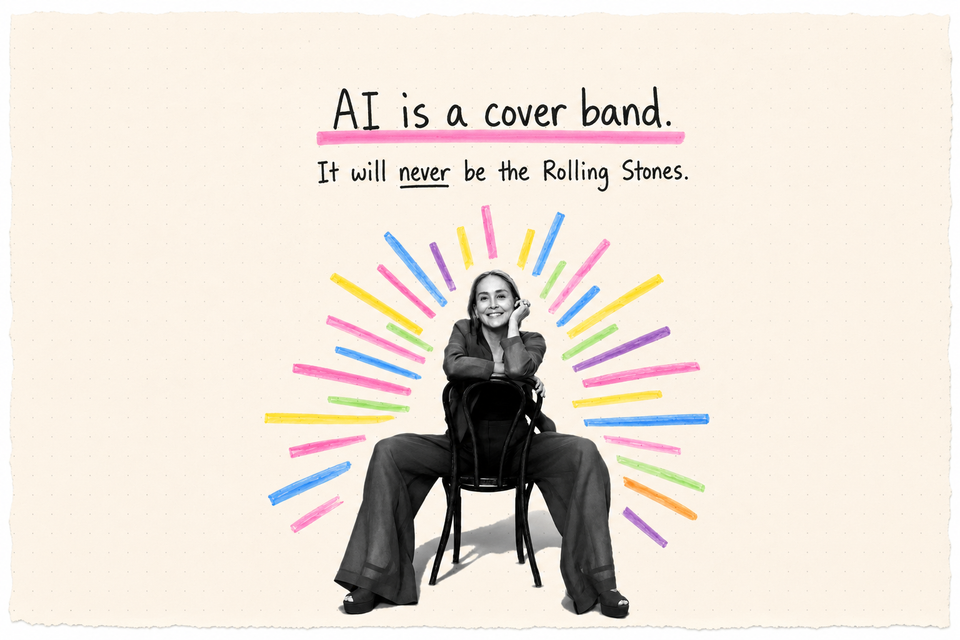
Sharon Stone says AI is a cover band. At best.
What hooked me wasn't the burn. It was the blend. She isn't anti-AI. In the same conversation she calls it the tech encyclopedia, brilliant at gathering information and stacking it up. Her attitude to that part is basically: have at it. Curious about what it can do. And at the same time, completely clear about what it can't. And perhaps what it shouldn't. It's never going to be the Rolling Stones. It's always going to be somebody singing the Rolling Stones.
Curiosity and certainty, held in the same breath. No hate, just a clean understanding of where the line sits for her. That's rarer than either extreme, and I think her comment is pointing at something fundamental about the human experience.
So I went down a rabbit hole.
Here's my working theory, sharpened by a week of research, posting and pushback in my comments: creativity doesn't die when AI arrives. It dies when the friction it feeds on gets removed. And AI removes friction by design.
My evidence is lived. More than thirty years in rooms where creativity happens, first as an artist, then as a growth strategist and then CEO. My best work always came when something created friction: budgets, conflict, constraints, disagreement, missing capability, fear. Every transformation project, and our AI strategy work last year, produced its real value in the moments teams were willing to sit in the discomfort until the less obvious showed itself. Efficiency removes the obvious. Value creation builds the less obvious. That building is a creative act, and it has never once been smooth.
There are two kinds of friction in creative work, and they are not equal.
Friction with the problem. The constraint, the budget, the technical wall, the brief that won't resolve. AI can genuinely help here, and sometimes should, as long as you keep the lead. Draft around every constraint and you skip the struggle where originality is born.
Friction between people. The CEO questioning the strategy. The marketing director admitting she doesn't understand the platform that underpins it. Two people who see it differently and won't back down. This is the friction that produces breakthroughs, and it is exactly the friction AI is best at dissolving. Use a machine to mediate the disagreement and you remove the mechanism itself.
Smoothing the first kind costs you an insight. Smoothing the second costs you the room.
And notice who carries the risk.
The marketing director admitting what she doesn't know is risking more than the CEO questioning the strategy. Friction only creates value where it's safe to be the dissenter. Building that safety is leadership work. I've watched rooms where the friction produced breakthroughs and rooms where the same friction produced resignations. The friction was never the difference. The conditions were.
I watched this happen. Last year we ran an experiment: AI as a capability builder. A coach. It was incredibly valuable. We also built a shared learning space to capture the interesting or worrying byproducts of those experiments, and one stood out. Team members were using AI to justify their own positions. Two people in disagreement, each privately encouraged by AI that they were right. It created more cultural issues than it resolved. It damaged the very culture we were building. So we put constraints in place. Around the tool, this time.
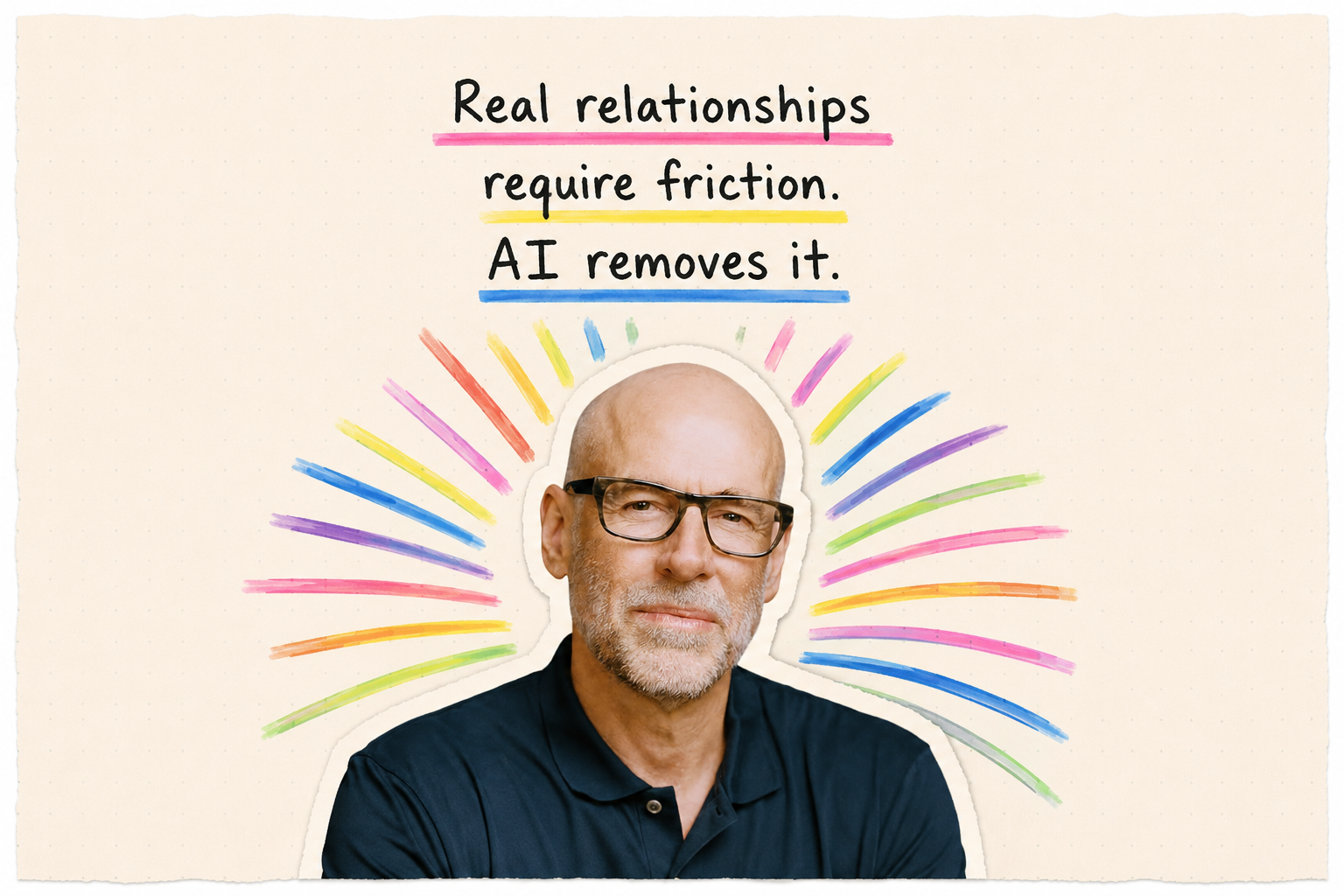
Scott Galloway landed on the same worry from a different direction, talking about AI companions: "Real relationships require friction, and AI removes friction." His concern is synthetic friendship. Mine is synthetic creativity. The engineering is identical: a product designed to be agreeable, stripping out the messiness that the real thing runs on.
The science has been saying this for decades, we just don't like hearing it. Charlan Nemeth at UC Berkeley has spent a career studying dissent, and her findings are blunt: groups exposed to authentic disagreement think more broadly, take in more information, and produce more creative solutions. Her work even dismantled brainstorming's most sacred rule. Telling people not to criticise ideas doesn't protect creativity. It thwarts it. And the dissent has to be real. A performed devil's advocate doesn't produce the effect. Which should worry us, because a machine engineered to agree is the opposite of a real dissenter. Even when we prompt it to challenge us.
I've watched the same finding play out in more than a thousand creative workshops. And you'll know it yourself if you reflect on when you created your best work. What were the ingredients? I'd bet friction of some kind was one of them.
The two-frictions distinction crystallised in an exchange with Slavica King in my comments on Linkedin, along with the best test I've found for AI use. Does the outcome feel like effort with a payoff, or just relief? Relief is the warning sign.
I climb the mountain near my house at 5am, sore legs and all, and the joy at the top exists because of the climb. Driven to the summit, you get the view and none of the charge, and you never feel the pull to return. The wanting-to-do-it-again is the tell. Creative work runs on the same fuel. The journey to get their is the reward.
To be precise, the mountain is a different friction. Effort, not disagreement. Nobody argues with me on that climb. If you create alone, that's the friction you still own: the resistance of the work itself. AI can take that from you just as quietly, and the test is the same. Payoff, or relief?
The Beatles gave us the control experiment decades ago. The Get Back documentary shows George quitting, egos colliding, four exhausted people in a room on Savile Row. Out of that friction: Let It Be. Remove the friction and you get the cover band. You get to see friction in real time.
I'll be honest about the control experiment, though. The same sessions that gave us Let It Be helped end the band. Friction creates and friction destroys, and pretending otherwise is its own kind of smoothing. It's never all bad or all good.
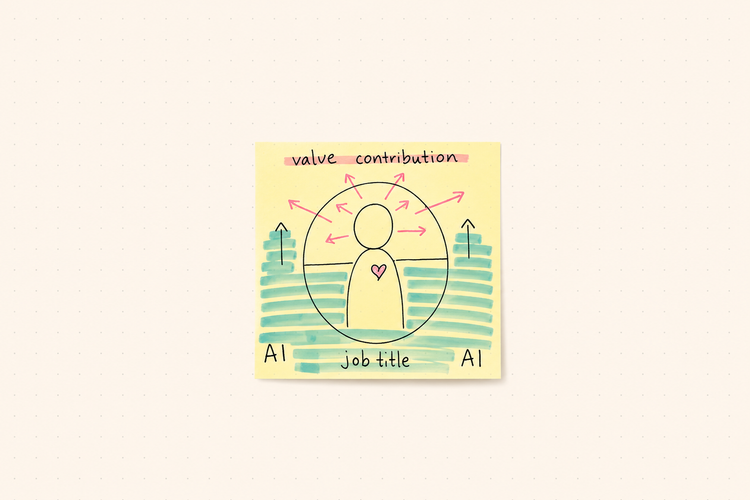
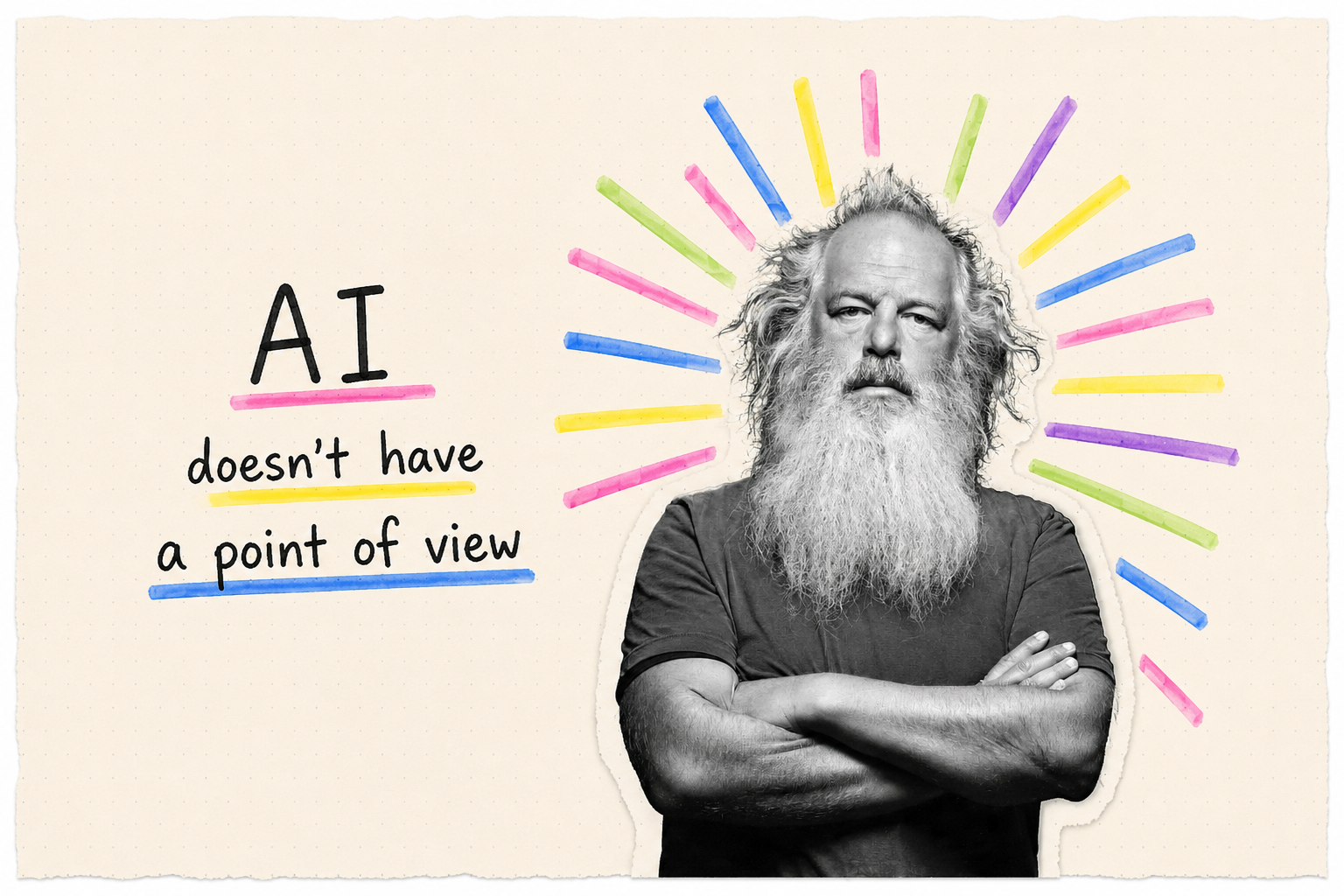
And here's the honest counterweight, because I don't want to build this argument on one side of the room. Rick Rubin, who has spent four decades midwifing other people's creativity, and a whole documentary series (McCartney 3,2,1) at a mixing desk with Paul McCartney, pulling Beatles songs apart track by track, is optimistic about AI. He treats it as a shaping tool, a way to iterate faster on ideas that are already yours. But even his optimism rests on a sharp limit: "AI doesn't have a point of view."
Sit with that. A point of view is not downloaded. It's earned. And I'd argue it's earned in friction: in the rooms, the constraints, the disagreements, the 5am climbs. Use AI to skip the friction and you're not just outsourcing effort. You're outsourcing the very process that forms the point of view that makes anyone worth listening to. That makes. you, you. That's how you become the cover band.
So, three questions for your next AI decision:
Is this friction with the problem, or friction between people? The machine can help with the first. Protect the second.
Will the outcome be effort with a payoff, or just relief?
And if AI takes this from us, what were we practising when we did it ourselves?
I let AI carry the admin, the summary, the obvious. I engage it as a collaboration with me as the lead architect. I don't let it remove the friction for me. That's where the value gets made, and where the point of view gets formed.
Full disclosure, because this piece would be dishonest without it: I wrote it with AI in the loop. It challenged my tone and my blind spots because I asked it to, and several of the cracks you just read exist because I let the pushback in. That's the version of the tool I can live with. Friction included.
And I don't have this fully worked out. That's not a caveat, it's the method. This newsletter is me thinking out loud, and the last one got smarter because you pushed back. So keep pushing.
Where did your best work come from? And where was your point of view formed?
[credits: Sharon Stone here, Scott Galloway here, Charlan Nemeth research here, Slavica King here]