What Are We Optimising For?
Firstly, hello again.
This is Jane, the writer of the CVB newsletter. I've just added a voice memo option to the newsletter so we can start figuring this all out together.
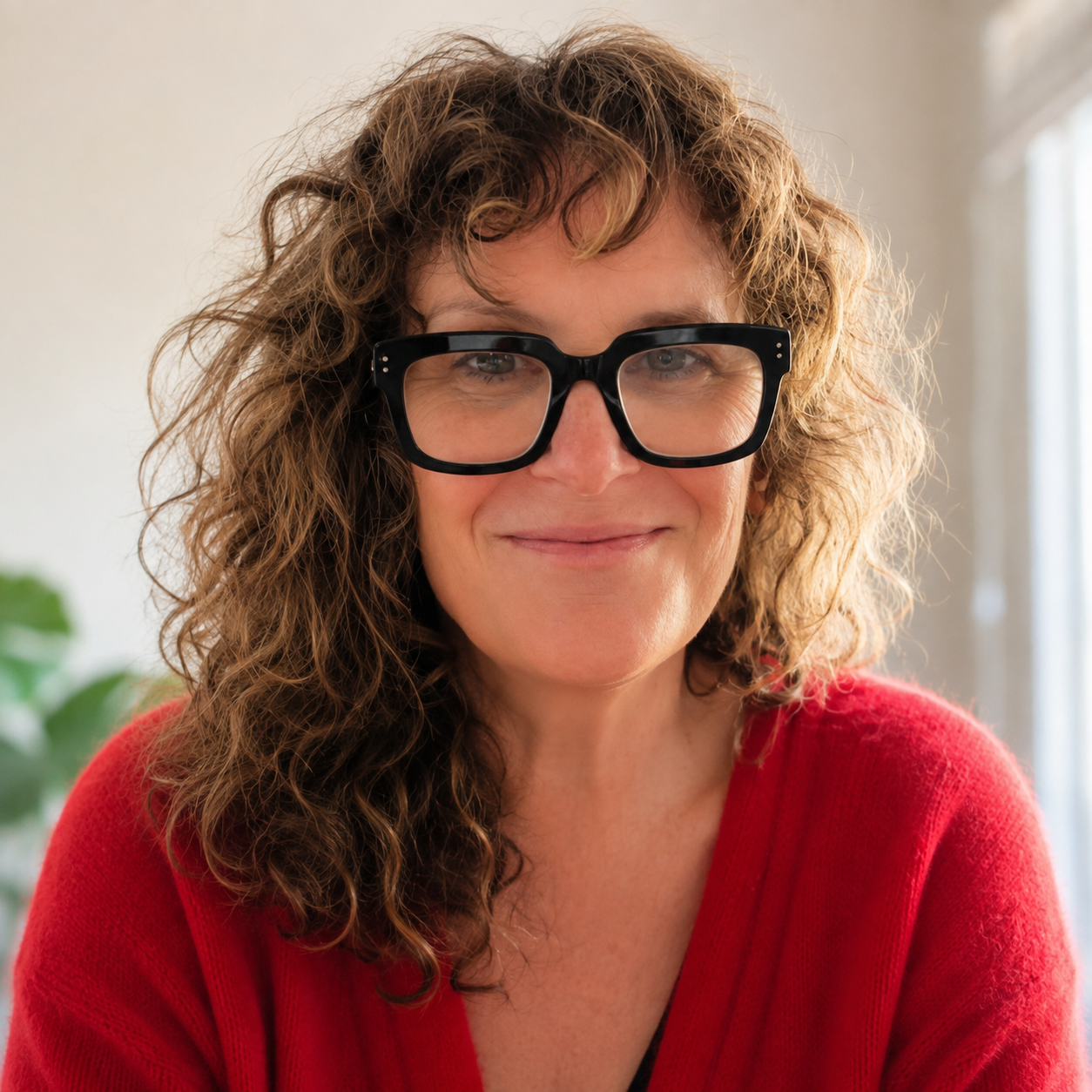
This newsletter is a place where I share what’s drawing my curiosity, what I’m learning, and what I’m still trying to work out. I’m sharing it with you in case you’re curious about some of the same things.
So we can figure it out together.
I've always been fascinated by humans and technology - the space where they meet, and what happens in it. That fascination started in my first role in advertising in 2000, and it's shaped every job since. How do we use technology, for ourselves, our customers, our staff, to actually make things better? And why do we so often fail to design the system around the human - letting the tech take the lead instead?
This is what’s grabbing my curiosity this week.
Agency
I’ve spent a lot of my career helping people work out what to do next. Understand the situation. Define the problem. Create clarity. Make a choice. Move.
It’s a pattern I love.
But lately I’ve been wondering whether we’ve become very good at something without stopping to ask whether it’s actually the thing we want.
Optimisation.
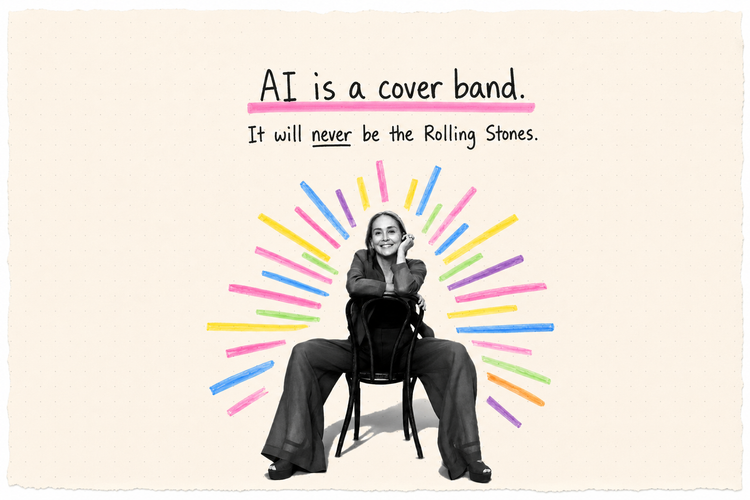
AI is accelerating this enormously. It can make us faster, more productive, more informed, more capable. It can reduce the friction between a question and an answer to almost nothing. And I think that’s extraordinary. I've spent my week building out my agentic org structure. And it's magic.
But there’s a question underneath it that I don’t think we’re asking enough: what future are we optimising for?
Because if AI makes almost anything possible, possibility stops being the problem.
Choice becomes the problem.
And choice is hard. I know this personally. I’m at a point where I could choose my next job. I have decades of experience and a strange and wonderful collection of skills.
Designer.
Creative.
Strategist.
Digital transformation consultant.
CEO.
On paper, it looks random. But I’ve started to see the thread. I’ve always been interested in what sits underneath things.
People. Systems. Culture. Technology. Emotion.
What’s visible. And especially what isn’t.
So rather than immediately deciding what comes next, I’ve paused. That pause has come after what has been the best role of my life.
I had the privilege of being CEO at Mont Marte. During that time, I implemented an AI strategy and helped transform the business. I also had the opportunity to run an experiment that I found fascinating: we built a CEO knowledge base with the explicit goal of seeing whether, one day, we could replace my role with it. It was a brilliant opportunity to learn.
Not just about what AI could do, but about what a CEO actually does - what can be captured, codified and handed over, and what still requires human judgement.
And I loved it.
It was exciting. Challenging. And it left me with a much bigger question. Because AI has enormous power. And, to borrow from Spider-Man, with great power comes great responsibility. I take that responsibility seriously. And I know we all do.
If I’m going to help the people I care about navigate this technology, I need to understand more than what AI can do. I need to understand what it means for teams. What we should give to it. What we shouldn’t. What happens to our capabilities when we delegate more of our thinking and doing. And what human capabilities become even more important when machines can do so much more.
That feels like a responsibility worth learning into. So rather than rushing to decide what comes next, I’m giving myself some space until the end of the year to dig into it properly.
And that has brought me to a much more fundamental question: what do I actually want?
It turns out that’s much harder than: What can I do? What am I good at? Where can I create value? Those questions are easy. But what do I want?
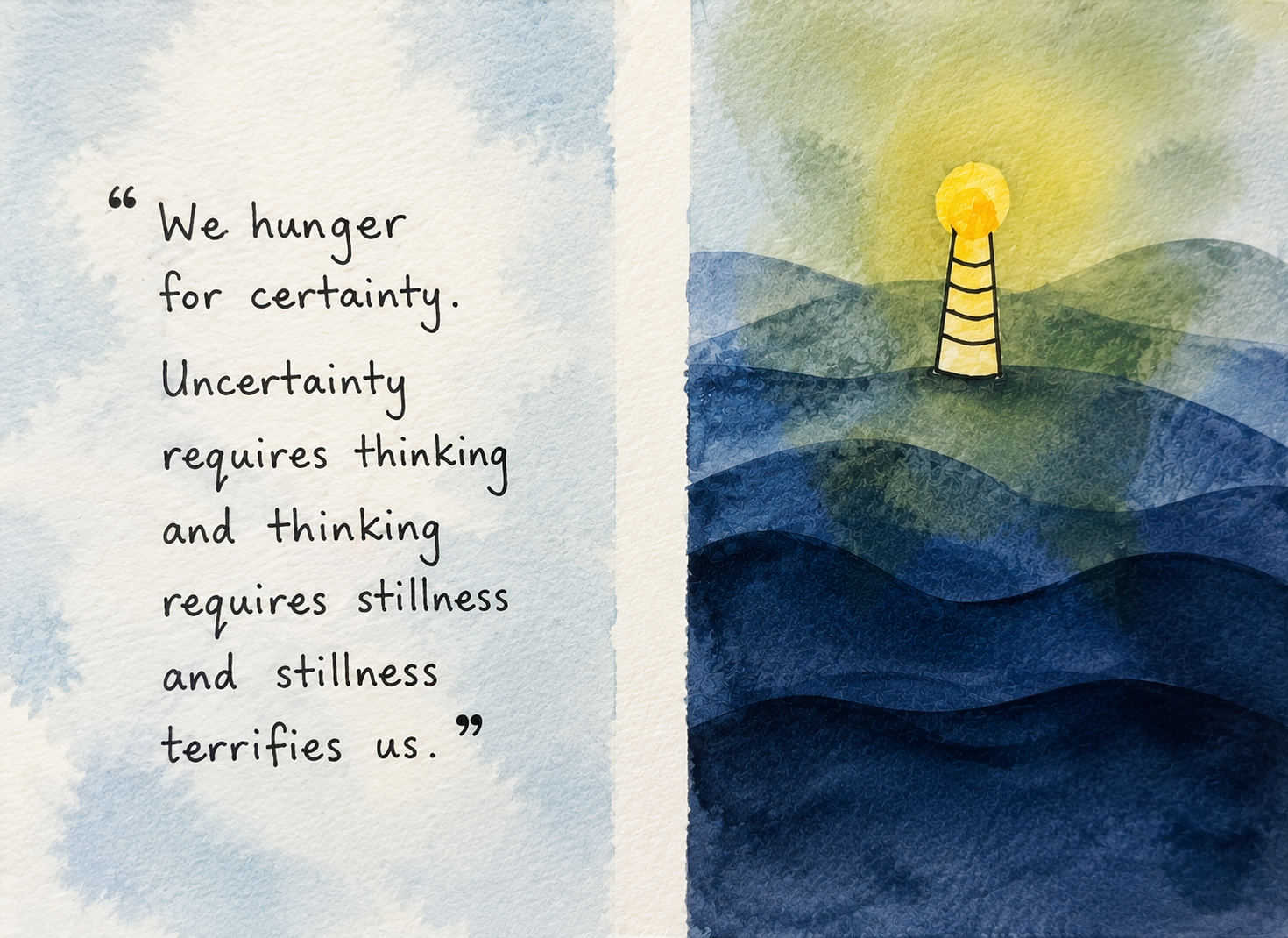
That requires something different. More attention, perhaps. More tolerance for not knowing. More silence.
And this is where the AI conversation gets more interesting to me. I don’t think the biggest transformation will simply be that AI does more of our work. It may be that AI gives more people the ability to act on their ideas.
To make things.
Learn things.
Start businesses.
Solve problems.
Tell stories.
Express ideas.
The distance between I have an idea and I can do something about it is shrinking. That could be enormous. But every new capability comes with trade-offs.
AI can make us faster. But what happens to the thinking that used to happen in the space between the question and the answer?
It can give us ideas. But what happens to our own creative muscles?
It can remove tedious work. But what happens when some of that work was also how we learned?
It can make us more certain. But what happens to our ability to sit with not knowing?
It can give us almost limitless choice. But what happens when more choice makes it harder to know what we actually want?
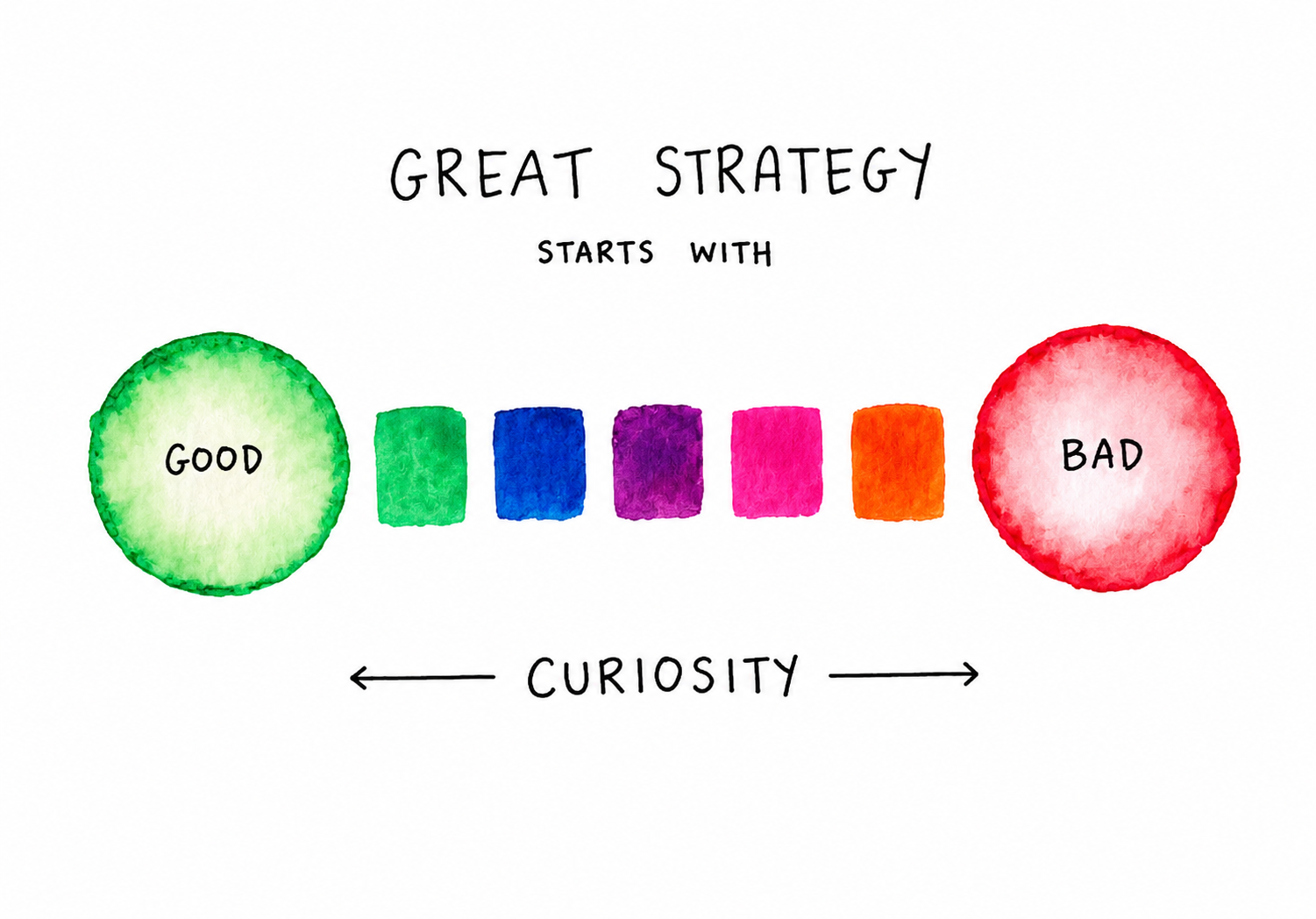
None of these are arguments against AI. They are simply trade-offs. And I think that's important. It's tempting to turn this into a binary - for AI or against it, pro or anti. But real clarity doesn't come from picking a side. It comes from staying curious. Because if we're going to make choices about what we give to AI, we need to understand not just what we're gaining, but what we might be giving up.
That is where agency comes in.
In psychology, agency is the capacity to act intentionally and influence what happens. It doesn’t mean we control the outcome. It means we recognise that we have a part to play in creating it.
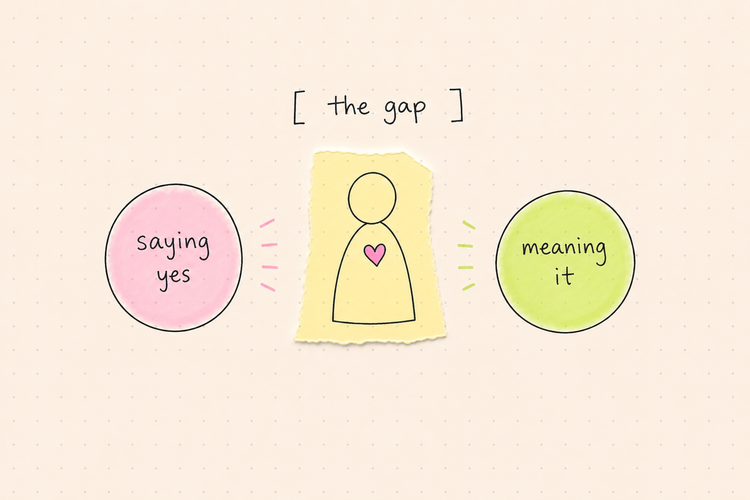
So perhaps agency isn't simply having the ability to choose. It is being able to look at the choices in front of us, understand the trade-offs, and intentionally decide what is worth doing.
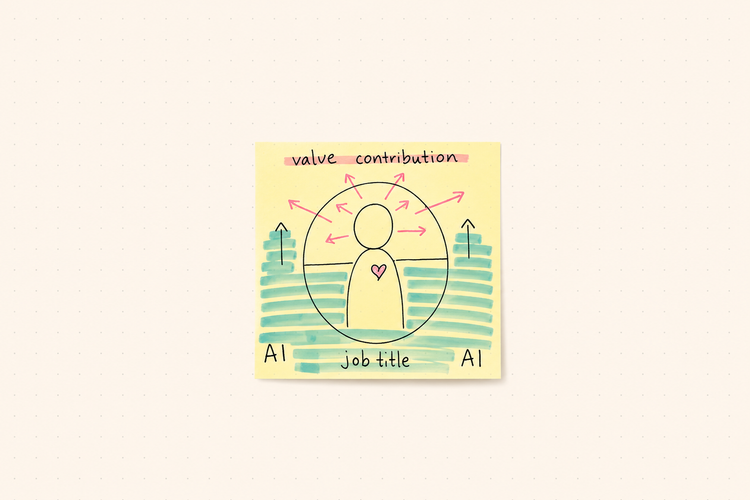
AI expands what we can do. Our job is to decide what we should do. And that feels increasingly important to me. Because having more capability doesn’t automatically mean knowing what to do with it.
That part is still ours.
Knowing what matters. Developing taste. Protecting attention. Tolerating uncertainty. Knowing when something is enough. The human capabilities we need to continue to nurture.
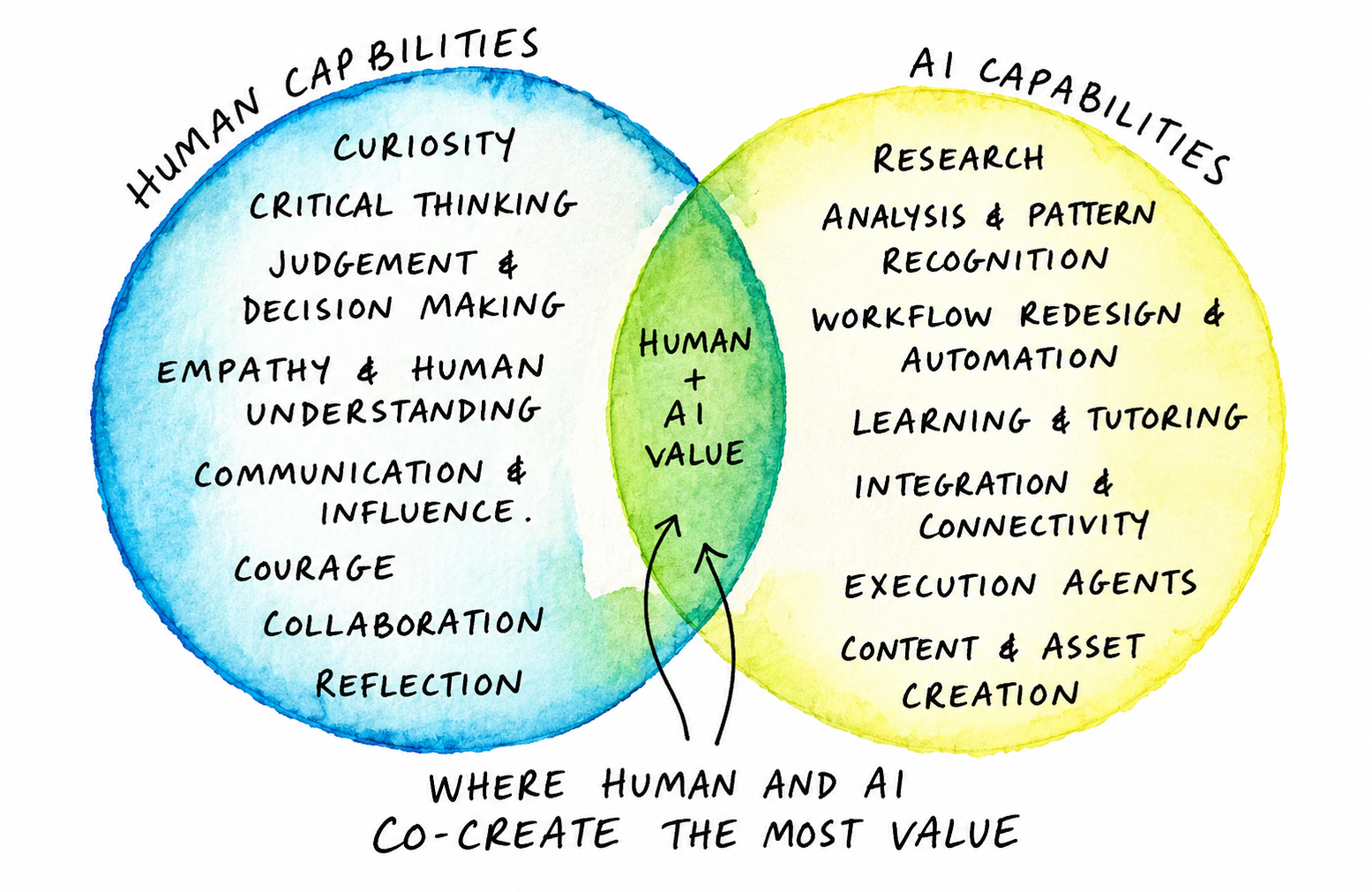
I’m increasingly interested in those things. For me, the answer is becoming clearer.
I want to create. I want to write and paint. I want to learn and share what I learn. I want to explore AI and what it means for humans, work, creativity and society.
And I keep coming back to the same question: how do we use all this new capability to solve really important problems, rather than simply making everything faster?
I want a world where more people have access to agency. Where technology helps us tackle problems that actually matter. Where people can participate in creating the future rather than simply adapting to it. And where, in all our excitement about what technology makes possible, we don’t lose sight of why any of it matters in the first place.
Connection.
Presence.
Being with each other.
Being alive.
Maybe that’s why I keep coming back to agency. As AI expands what we are capable of doing, perhaps the thing we need to protect isn’t our ability to do more. It’s our ability to decide what is worth doing.
So maybe the question I want to spend more time with now isn’t: what should I do next?
It’s: what kind of world do I want to help create?
And then, perhaps the harder question: what would I need to become to help create it?
I don’t have the answers yet. And for once, I’m okay with that. I’m going to follow the curiosity.
Write.
Create.
Think.
Pay attention.
And see what becomes possible.
Maybe that’s the real opportunity here. Not having AI tell us what to do next. Having enough space, agency and attention to work out what we actually want to do.
What’s the future you want to create?
Thanks for reading.
And if you want to share your thoughts with me, I’d love to hear them. Send me a voice note here.
Let’s figure this out together.