What's your 53%?
I started my career figuring out what made global brands irreplaceable whilst working as a strategist in Seoul. Not just different. Irreplaceable. One question, asked of every client: what makes you irreplaceable? And I have been obsessed with it ever since — applied to everyone but myself. I simply couldn't see myself clearly. The same lens I use on others doesn't turn inward easily.
Then, at the end of my current role, a message arrived. Someone I'd worked alongside closely. They thanked me for teaching them about empathy in leadership. For challenging them in a way they'd valued, because it led to growth. For making a difference to their outlook that they said they'd carry forever.
I sat with that for a while. Because I hadn't built them into something new. I'd created the space for them to become who they already were. A truly awesome human.
It turns out there's a version of that question for people too. And in the age of AI, it might be the most important question you ever answer. Not just what makes you irreplaceable — but who are you already, underneath the role, the noise, the pace of the work?
I am working on that answer for myself as I consider my next step.
But first — the honest part.
Every generation has faced a version of this fear. Outsourcing. Offshoring. Automation. Now AI. The work that used to take a team can be done faster and cheaper by a machine. I feel that fear too. It arrived the moment I read a post claiming CEOs would be replaced by AI — just when I'd gotten somewhere I actually enjoyed.
The fear is real. I'm not going to dress it up.
But fear, looked at sideways, is almost always pointing at something. In this case, it's pointing at a question we've never had more reason to answer. Not what role do you hold. Who are you — and what can only you bring?
The opportunity inside the fear: when the automated part goes, what's left is the part that was always the real work.
And the hint — it's almost always the human stuff.
Here's my working theory.
AI handles the repetitive, the documentable, the low-stakes — faster and cheaper than anything you've built. It has a higher IQ than most of us and can produce more content than we ever could.
The danger is subtler. You use AI to optimise, and in the process optimise away the part that makes you irreplaceable. Because you never stopped to name it. And often that part isn't something you need to build. It's already there. You just haven't seen it clearly yet.

Take IKEA. Their customer service was costing a fortune. When they analysed the data, they found that 47% of all enquiries could be handled by AI: order tracking, returns, stock questions. The rest was design advice. Customers wanting help imagining their space. That was being squeezed into busy service days and largely lost.
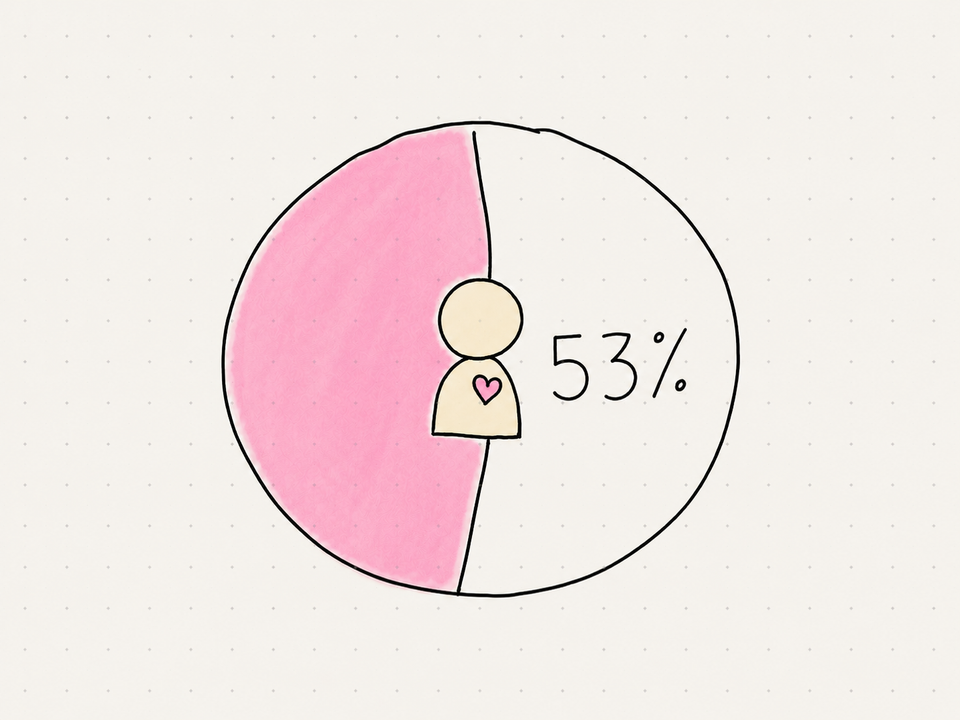
IKEA automated the 47%. Then they retrained 8,500 call centre workers as remote interior design consultants - the remaining 53%. Not one was laid off. That consultation service generated €1.3 billion in revenue in its first full year. They've set a target to grow it to 10% of group sales by 2028.
Those 8,500 workers were already design consultants. The routine calls had been obscuring it. IKEA didn't create something new. They revealed what was already there.
And it was never an AI strategy. It was a people strategy — starting with a well-defined and understood problem.
The 53% that remained was all human. It always had been.
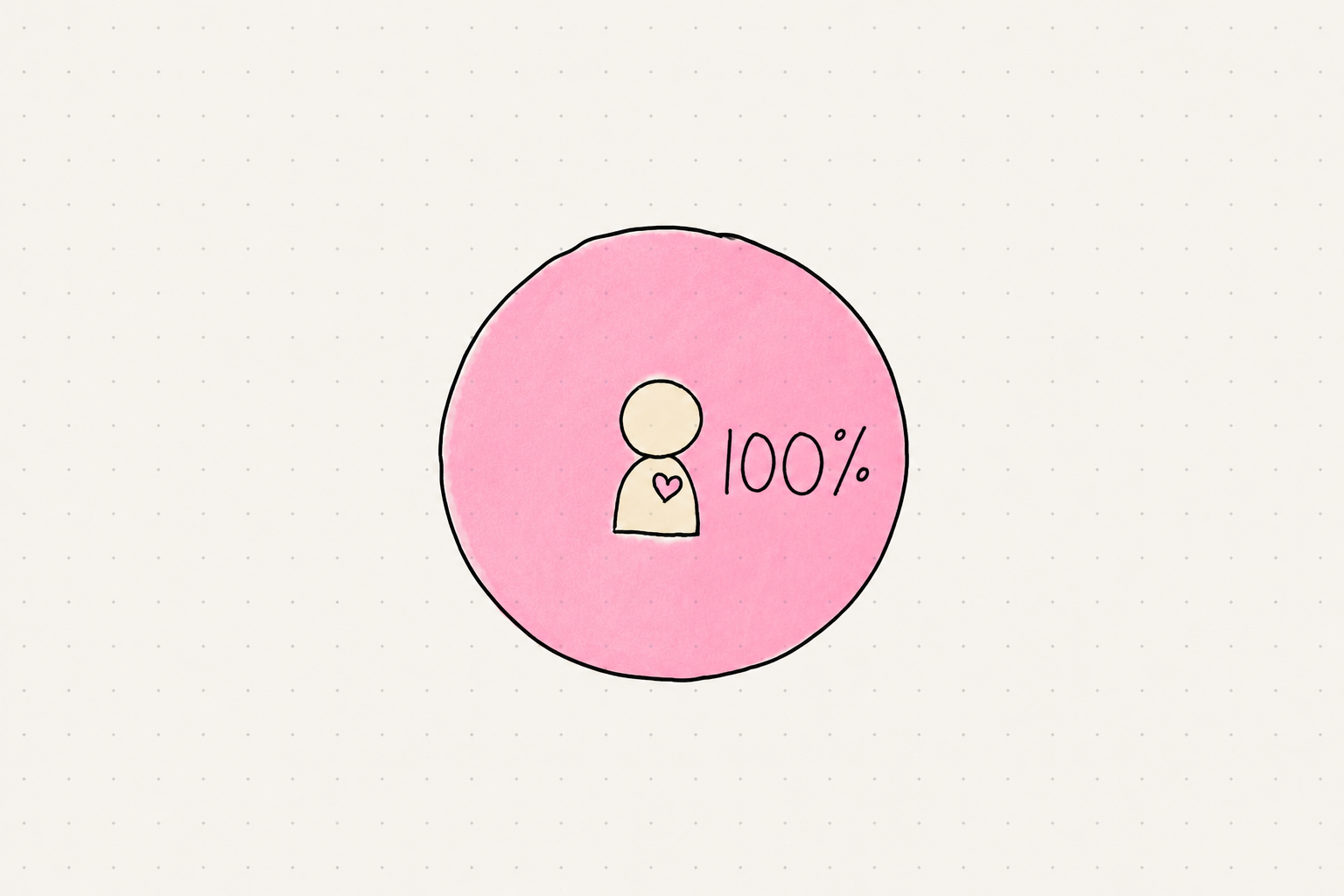
Imagine having that kind of clarity about yourself.
What's your 53%? And what if you could expand it to 100%?
I've mapped this question — what makes you irreplaceable? — with clients for years. It ends up being around 15 to 20 questions. I'm now turning them inward, in case they're useful to you.
Here are four of them. Sit with them honestly. I've included my own answers.
What did you love doing as a child? Creating things other people could enjoy. And challenging the status quo when it didn't serve the collective. Some teachers loved it. Some not so much.
What do people most often compliment you for? The ability to quickly understand the actual business challenge — not the stated one — and articulate a path forward that others can get behind. You can also ask directly for feedback from people who know your work. As I came to the end of this last role, I did that again. Something new emerged.
What do you do that feels so easy it's easy to undervalue? I see systems quickly. I see who a person or business already is, before they can see it themselves. I can stay in the uncertainty. Hold the tension. When most people are already moving toward the exit.
What do you love doing? I love business — specifically growing founder-led, family businesses. I'm good at it. And I love seeing the impact that growth has on a founder and their family. It's personal.
When I sit with those answers, a fingerprint starts to emerge.
Seeing what's already there. I see who someone already is — and the gap between that and who they're being — before they can name it themselves. It's what I've done for brands my whole career. It's what I do for people.
Real-problem articulation. I identify what's actually going on versus what's been stated, and name it in a way that gets a room moving.
Holding the hard. I stay in uncertainty and friction when others move to resolution too quickly. This matters most at inflection points, when the gap between who someone is and who they're being gets widest. Someone needs to hold the room differently while they close it.
Making room. The work is less about adding capability and more about removing what's in the way. The empathy in leadership. The deep curiosity that builds self-awareness. Knowing when to step back so someone else can step forward.
Making for others. The thread from childhood. I create things — frameworks, strategies, programmes, writing — that other people can use to reach their own best version of themselves.
That message helped me name what I'd been doing without knowing it. I hadn't given that person something they didn't have. I'd created the conditions for them to become who they already were.
That fingerprint becomes a simple statement:
I see who founders and their people already are — and create the conditions for them to become it. Usually at the moment when something has to change.
And when people grow, businesses grow.
From that, a set of things worth building.
Unlock & Amplify is the programme that does exactly what this newsletter describes. It maps your 53% — who you already are — builds the commercial model that belongs to it, and integrates the strategic work with the human work. Coming in 2026 in a new iteration. Subscribe to the newsletter to find out more.
One-to-one leadership coaching is for leaders who want to do this work now, without waiting for the programme. Strategic and human side together.
Board and advisory work is an independent perspective on business, strategy, AI, and transformation at leadership level. I help boards ask better questions about technology risk, digital capability, and what it actually means to lead through change.
Fractional strategic work means being embedded inside your business for a defined period — attending the right rooms, building the right frameworks, keeping strategy connected to execution so it doesn't die on a slide deck.
The mapping doesn't make the doing easy. But it makes the choices clear. Clear choices are underrated.
For me, the coaching is the clear 53%. It requires something, though. Letting go of the CEO roles. Stepping back into work I'd set aside in search of more certainty. The board, advisory, and fractional work is where I have more ease.
The final step — and I'm only learning to trust this — is to sit with what you've mapped and notice where your energy actually goes. Not where you think it should go. Where it actually goes. A simple guide I use.
Does it energise me?
That's the 53%. That's where you start.
That's where I am starting.